Carbon Electrode Processing Machinery
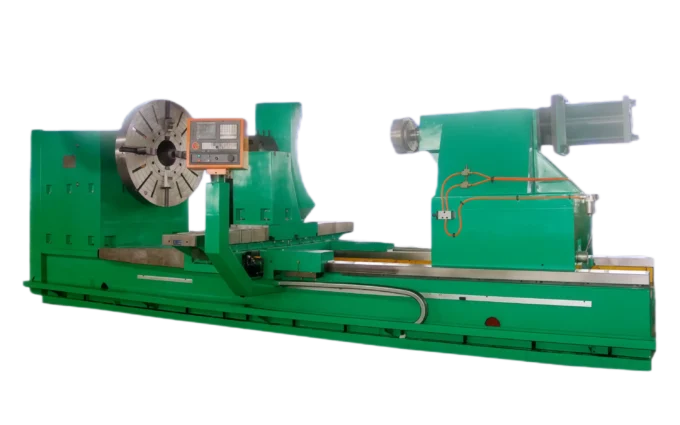
CGK-43 CNC Carbon Electrode Double-End Boring and Facing Machine
The CGK-43 prepares large carbon electrodes with parallel end faces and centered holes before downstream threading.
View SpecificationsThe CGK-43 prepares large carbon electrodes with parallel end faces and centered holes before downstream threading.
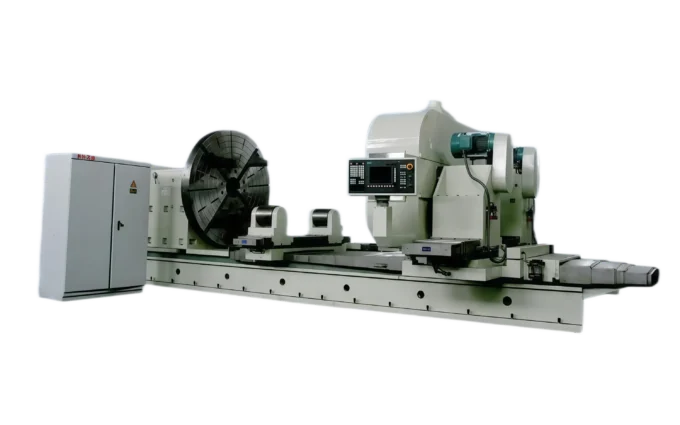
View SpecificationsThe CGK-42 machines the cylindrical body and seating surfaces of large carbon electrodes before downstream threading.
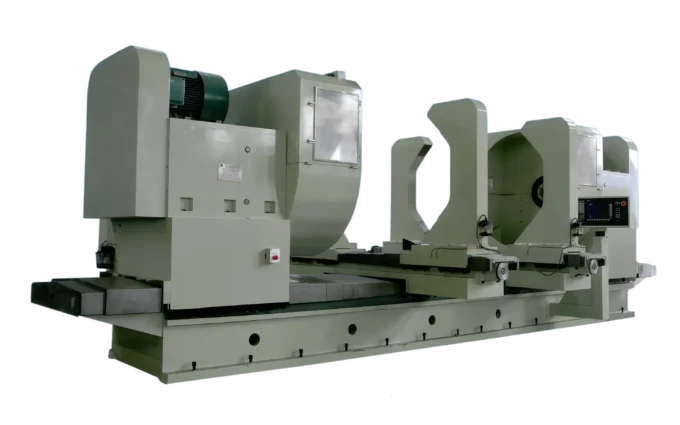
View SpecificationsThe CGK-41 cuts the threads and finishes the seating surfaces on large-diameter carbon electrodes used in submerged-arc furnace…
View SpecificationsThe CGK·RZ·09 is built for plants producing large-diameter carbon electrode columns for submerged arc furnaces — silicon metal, ferroalloy and calcium carbide production.
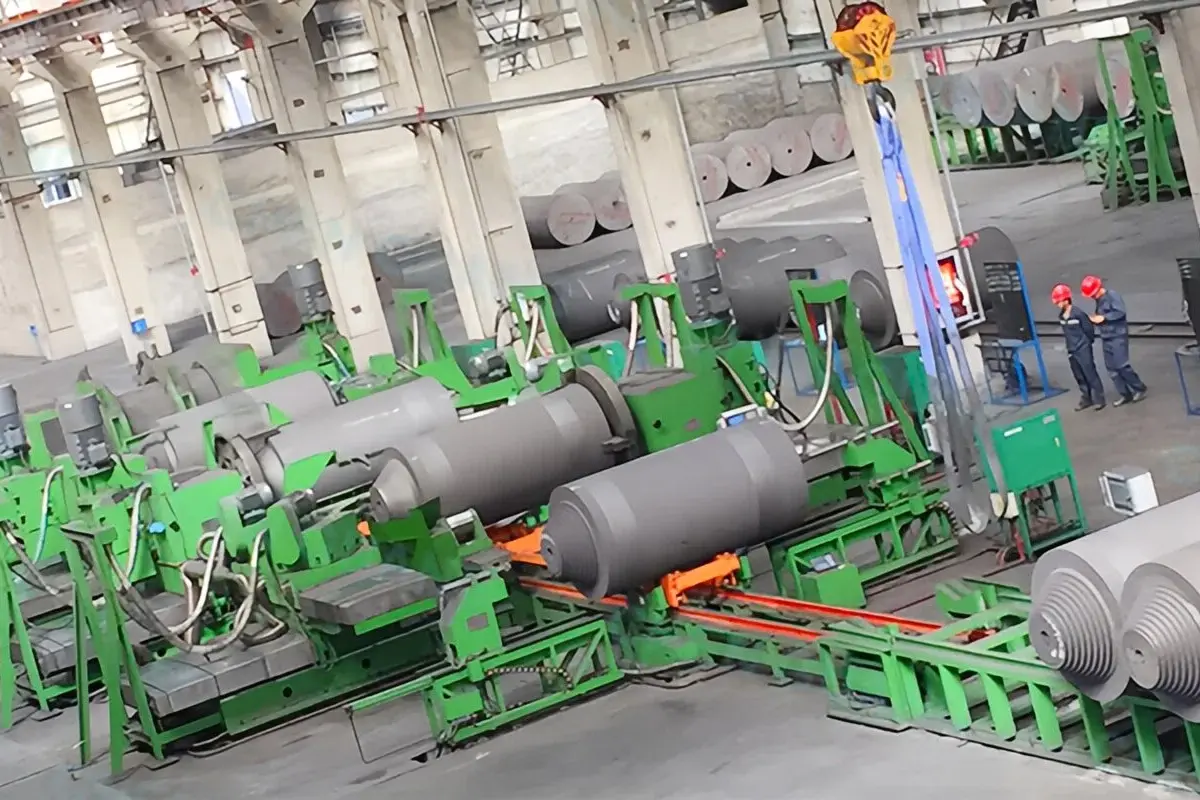
Carbon electrodes are the large-diameter current-carrying columns used in submerged arc furnaces. Their joint geometry, body diameter and thread profile directly determine whether the electrode column carries furnace current without hot spots or premature joint failure. Where plants run these operations on isolated machines with crane transfers between stations, the CGK·RZ·09 removes every manual hand-off and holds tolerance across the full sequence, because each station starts from a datum the previous station has already established.
A line that processes electrodes in the Φ800–Φ1400 range needs to switch between specifications without retooling every station. The modular design of the CGK·RZ·09 accommodates different electrode diameters, thread pitches and cone angles through program calls rather than hardware changes.
Request a Line Layout →The five machining stations run in a fixed sequence because each operation depends on the datum the previous one established. Robotic manipulators transfer electrodes between stations and an industrial PLC coordinates the beat rate.
Locates the electrode's longitudinal axis and squares the reference every downstream station works from. A column that enters out-of-round propagates that error, so centering is the quality gate for the full sequence.
Bores the nipple socket and mills the external cone at each end against a common datum, holding concentricity by construction rather than re-measurement.
Strips oxidation skin and brings the body to finished diameter. Real-time tool-wear compensation holds the diameter inside tolerance across the full body length.
Cuts the nipple socket thread with multi-pass cutting and in-process measurement, holding thread profile on every electrode.
Cuts the mating external thread that lets one electrode column join to the next — the feature that carries furnace current without hot spots at the joint.
Between each pair of stations, an automatic feeding manipulator lifts, transfers and seats the electrode on a timed cycle, while the industrial PLC manages handshakes, beat rates and interlocks.
A production line rather than a row of machines — five capabilities that solve the bottlenecks of isolated-station electrode plants.
Centering, boring, turning and both threading stations run in a fixed sequence, so each station receives the electrode with its reference already established — no repositioning error.
Automatic manipulators handle electrodes between stations without crane operators or floor crews. Throughput is driven by machining cycle time, not manual transfer speed.
Each station measures the feature it just cut while the electrode is still clamped and feeds deviation back to the CNC for real-time tool-offset adjustment.
Switch between electrode diameters, thread pitches and cone angles through program calls rather than hardware changes — the same line handles mixed furnace specifications.
The PLC manages station handshakes, beat rates and interlocks, while remote monitoring tracks status, tool wear and alarms from the control room or mobile device.
Upstream cleaning and downstream inspection/conveyance share the same engineering platform, so the line slots cleanly into an integrated electrode plant.
Main technical performance indicators from the factory datasheet.
| Parameter | Unit | CGK·RZ·09 |
|---|---|---|
| Model | — | CGK·RZ·09 |
| Machined workpiece diameter | mm | Φ1100–Φ1400 |
| Machined workpiece length | mm | 1900–3100 |
| Installed power | kW | 600 |
| Machine weight | t | 260 |
| Overall dimensions | mm | 47000×9850×3310 |
Designed for baked and graphitized carbon electrode columns used in high-current submerged arc furnace operations.
Send us your electrode diameter and length range, thread specification, throughput target, material type and workshop layout. Our engineering team will prepare a line layout with confirmed specifications, cycle-time estimate and quotation.
Request a Quote →