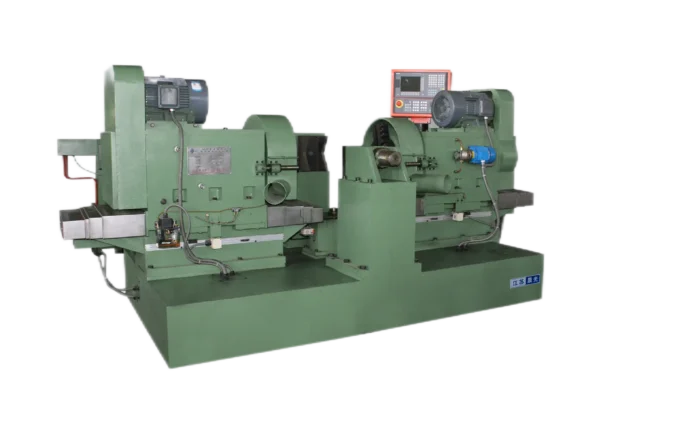
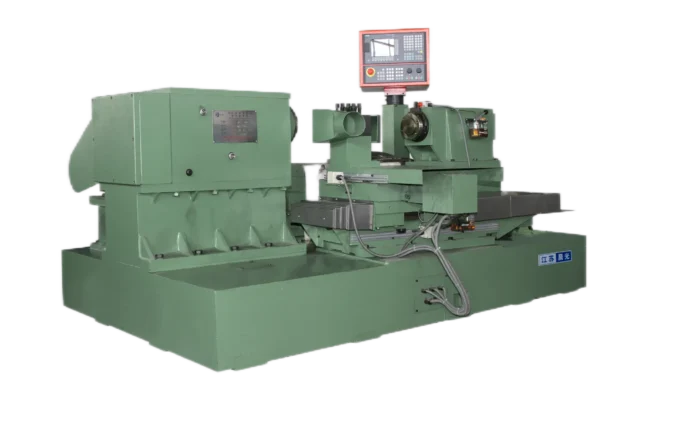
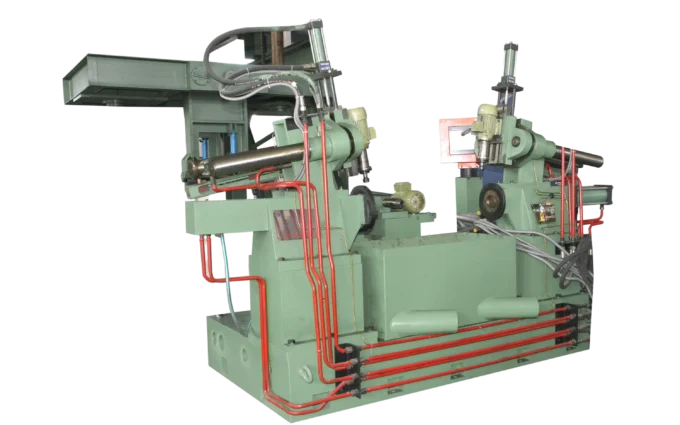
CGK-21 CNC Joint Double Thread Comb Processing Machine
Both Ends, One Setup, One Datum
The CGK-21 is built for plants machining graphite electrode nipples — the small but highly stressed connectors that join electrode sections into a furnace column.

A graphite electrode nipple carries the full furnace current across a threaded joint smaller than the electrode body itself. The CGK-21 machines both threaded ends in one clamping, holding the pitch error, taper tolerance and four-point deviation that determine whether the nipple seats cleanly and carries current without localised heating. By cutting both ends against a single datum, the machine removes the repositioning error that accumulates when each end is threaded on a separate lathe.
Request a Quote →Key Features & Working Principle
Six capabilities that let one machine deliver the thread quality a furnace joint demands.
Double-End Simultaneous Threading
Both nipple ends are comb-threaded in one clamping, so the two threads share the same axis and pitch reference from the start.
Full CNC Axis Control
Every motion axis is CNC controlled, eliminating mechanical transmission-chain error from the thread profile and taper.
Micron-Level Pitch Accuracy
Single-thread pitch error is held within ±0.015 mm and cumulative pitch error within 0.025 mm per 25 mm of thread length.
Rigid Heavy Bed
An 8.8 tonne cast bed and precision guideways absorb cutting forces during thread combing, protecting surface finish and tool life.
Program-Driven Changeover
Different nipple diameters and lengths are handled by calling the stored part program — not by rebuilding fixtures or mechanical stops.
High-Torque Main Drive
A 5.5 kW main motor drives the comb tool through hard, abrasive graphite grades without stalling or tearing the thread flank.
Why Choose the CGK-21
Against separate lathes or mechanical thread comb machines, the CGK-21 wins on joint accuracy, repeatability and throughput.
Matched End Geometry
Both ends cut from the same datum means the two threads are coaxial and pitch-matched — the core requirement for a low-resistance furnace joint.
Furnace-Joint Thread Precision
Taper tolerance within ±20″ and four-point deviation within 0.04 mm meet the standards that keep a threaded joint from running hot.
Wide Diameter Range
One machine covers Φ120–Φ431 mm nipple diameters and 177–635 mm lengths, so a nipple shop serves multiple electrode grades.
Repeatable from First Piece to Last
CNC tool paths and digital offsets remove the operator-dependent variability of mechanical comb machines across a production shift.
Rigid Construction, Long Tool Life
The 8.8 tonne bed damps vibration during combing, giving better surface finish and longer intervals between tool changes.
Lower Cost per Nipple
One setup, one operator and automated cycles cut handling time and rework compared to threading each end on a separate machine.
CGK-21 — Technical Data
Main technical performance indicators from the factory datasheet.
| Parameter | Unit | CGK-21 |
|---|---|---|
| Model | — | CGK-21 |
| Machined nipple diameter | mm | Φ120–Φ431 |
| Machined nipple length | mm | 177–635 |
| Main motor power | kW | 5.5 |
| Single-thread pitch error | mm | ±0.015 |
| Cumulative thread pitch error | mm | ≤0.025 |
| Thread hole taper tolerance | ″ | ±20 |
| Double-end thread four-point error | mm | ≤0.04 |
| Machine weight | t | 8.8 |
Materials & Industries Served
Designed for carbon plants machining the threaded joints that connect graphite electrode columns in high-current furnace operations.
Frequently Asked Questions
What is a joint double thread comb processing machine?
What nipple sizes can the CGK-21 process?
What thread accuracy does the CGK-21 achieve?
How does the machine thread both ends simultaneously?
What control system does the CGK-21 use?
What information is needed for a quotation?
Configure a CGK-21 for Your Nipple Production
Send us your nipple diameter and length range, thread standard, taper ratio, pitch, electrode grade, daily throughput target, and workshop layout — including power supply and foundation requirements. Our engineering team will prepare a machine configuration with confirmed specifications and a quotation.
Request a Quote →